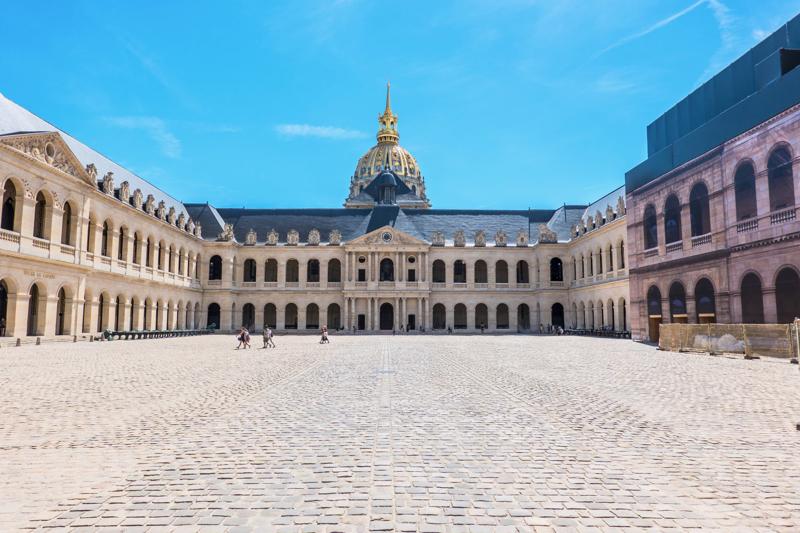
I’m not richer than Louis XIV. I don’t have a palace, a court, thousands of servants, or a country that bends its policy to my preferences.
But I live more comfortably than he did in almost every measurable way. So do most middle-class people in rich countries.
This is not me bragging; it’s an observation that the baseline has moved so far upward that we barely recognize it.
My groceries would be unbelievable at Versailles
A few days ago, I bought a package of cherries from Costco that came from Chile and a bag of pitted dates from Tunisia. My bananas came from Colombia. My local supermarket carries at least 10 distinct varieties of apples.
None of this felt special. It was just Thursday. Nor is the location special – a suburb in the greater New York City area.
In a palace, exotic food meant you managed to keep citrus trees alive through winter. When I visited Versailles, I saw the Orangery below the palace, built to house orange, lemon, oleander, palm, and pomegranate trees in the winter. A legion of workers would move the trees to the outdoor parterre in the summer.
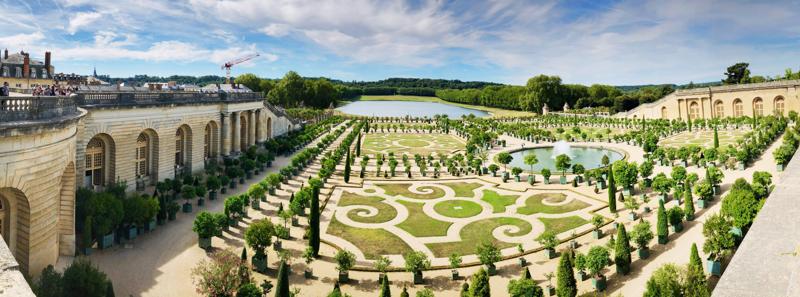
That was unimaginable luxury, but Louis couldn’t get dates, plantains, bananas, or choose a type of apple on a whim. Even with a staff of thousands, he wasn’t getting avocado toast. Neither could Queen Victoria, George Washington, Frederick the Great, or Julius Caesar. Meanwhile, I can choose among white, red, and yellow dragon fruit varieties.
Royalty, like the Sun King or Queen Victoria, lived in luxury that the common chimney sweep, bookkeeper, or baker of the time couldn’t comprehend. Yet, to us today, that “luxury” would feel like a drafty, smoky, dimly lit hassle.
My workforce
If I want something that is not in my house, I can usually have it delivered within a day. In many cases, it is the same day.
That is not a small convenience; it’s an invisible workforce, numerous warehouses, and a logistics system that treats my laziness like an engineering requirement.
Temperature control superpower
Queen Victoria frequently complained about cold rooms, especially in palaces like Buckingham Palace, where poor heating, ventilation, and chimney issues made winters notoriously chilly, leading to smoky fires, stuffy air, and general discomfort.
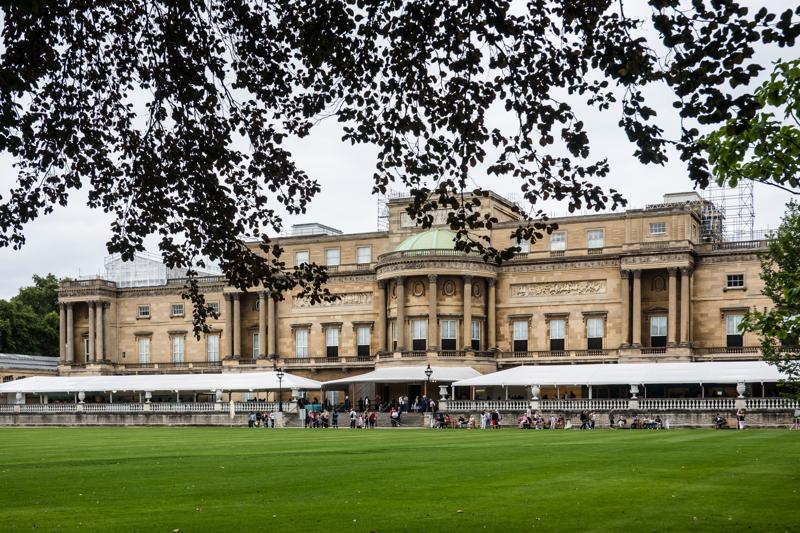
Louis XIV had to rely on fireplaces or open windows and doors for ventilation at Versailles. The size of the palace made it challenging to heat and insulate.
George Washington’s Mount Vernon home, like most homes of the era, used wood-burning fireplaces. Even with the fire burning, parts of a room might not get above freezing in the winter.
Meanwhile, I can control my room temperature within a degree.
I can schedule it or change it on a whim, and I can do it without needing to move or get anyone’s help. Also, my air is filtered, and it can be humidified or dehumidified as needed.
Outshining candles

The small office where I’m writing this has 6 overhead LED lights, each producing up to 1140 lumens.
At Versailles, the court used high-quality beeswax candles made by the Trudon family. They were bright and expensive – brighter and less smelly than tallow candles.
A beeswax candle might produce around 20 lumens of light (that’s a high-end estimate; most estimates seem to fall in the 12-18 lumen range). That means my office lighting is roughly equivalent to 342 candles. My kitchen would need well over 700 candles to feel “normal,” and that doesn’t even count the under-cabinet lights.
Also, my lights do not drip, smoke, or slowly stain the ceiling.
Most of my lights turn on automatically before it gets dark, so I don’t have to control them, but if I want to, I can use voice controls, switches, my phone, computer, tablet, or my watch to do so, saving the inconvenience of calling out to the hall bay.
The cost of candles at the time was staggering. A single candle could cost a week’s income for a French working man and lasted around 5 hours. Keeping my office lit for one evening would have cost 6.6 years of a laborer’s salary.
My bed would amaze a monarch (so would yours)
The comfort of mattresses is incomparably better, too, with a ridiculous number of custom choices.
Even if a king had an ornate bed and luxurious fabrics, he did not have today’s materials science, consistent manufacturing, or the ability to replace anything quickly.
I can choose from various firmness levels, temperatures, support options, allergy-friendly materials, and a pillow with a unique personality.
Showering without prep
I can step into a shower and get temperature-controlled water instantly, or fill a bath to exactly the desired warmth.
No servants hauling buckets of heated water up corridors. No bath that starts hot and turns sad halfway through. No scheduling a bath like it is a military operation.
Toilets are the most underrated luxury on Earth
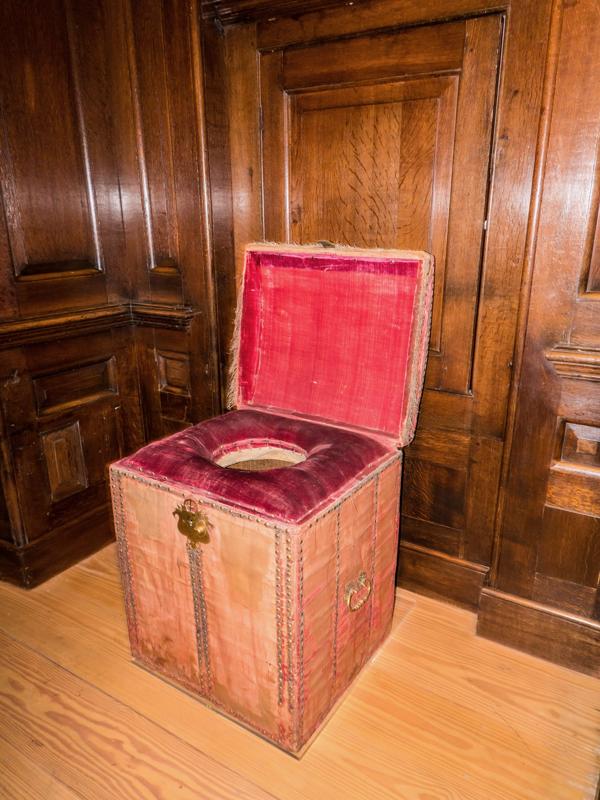
I can flush waste away with clean plumbing and a lever. I can wash my hands with hot water on demand. I can do all of this without a chamber pot, without a servant carrying anything, and without the smell becoming part of the building’s identity. No need for a Groom of the Stool or a porte-chaises d’affaires.
If you want a single piece of technology that separates “romantic period drama” from “I could live here,” it is plumbing.
Transportation at speeds and comfort Caesar could not imagine
Transportation used to be punishing, even for the wealthy. Roads were rough, suspension was primitive, and tires were nonexistent. Climate control was basically “wear more clothes” or “open something.” Footstoves were the best there was for in-carriage heat.
Queen Victoria complained about the “disturbing oscillations” of the Gold State Coach used for her coronation and other state occasions and refused to use it after the death of Prince Albert. King George VI described his coronation journey as “one of the most uncomfortable rides I have ever had in my life.”
I get to enjoy climate-controlled, quiet rides on paved roads with an auto-leveling suspension while listening to podcasts from over a dozen speakers on a Burmester sound system.
I do this while seated in a moving, climate-controlled room that rarely smells like horses.
I can summon a library while wearing sweatpants
At home, I have near-infinite instant access to books, news, and essentially most of the world’s information … an amount that puts the Encyclopédie, ou Dictionnaire raisonné des sciences, des arts et des métiers to shame (and Louis XIV didn’t even have access to that amazing compilation by Diderot since it was created after his demise).
Not “a well-stocked shelf” or “a newspaper with yesterday’s news” (did Louis XIV even have newspapers? I’m too lazy to check). I can read almost anything ever written, instantly: news from anywhere, ld old and new books, obscure journals, reddit posts, blogs, substack articles, and an infinite amount of distractive content.
Louis XIV could summon musicians and playwrights, but they took time to arrive, and their repertoire was limited. I can instantly access a library, binge-watch thousands of shows, or listen to the Vienna Philharmonic, Woody Guthrie, or any of hundreds of thousands of musical works.
I can look up facts about the Orangery at Versailles while standing in my kitchen and eating fruit from three continents.
Medical care is where the joke stops being a joke
We have not even started on medical care, and it is the category where the comparison stops being playful.
A minor infection is usually a trip to the pharmacy, not a life event. Dental work is unpleasant, but it exists, and it comes with anesthesia and sterile tools. A broken bone is painful, but it is typically fixable. Worn joints can be replaced. Vision can be corrected. Vaccines exist. Imaging exists. The idea of a “routine surgery” was once an absurd concept.
In the past, wealth bought comfort. It did not reliably buy survival.
I happen to live in a country that spends far more per capita on healthcare than any other high-income nation, yet achieves some of the poorest health outcomes. With no universal healthcare coverage, most people here are one medical emergency away from being destitute, but we still get anesthesia during surgery, medicines that are more effective than mercury and opium, and doctors who don’t approach treatment as an attempt to balance bodily “humors.”
The U.S. also consistently has the highest infant mortality rates of any wealthy country, recording more than 5 infant deaths per 1,000 live births. Yet even this abysmal statistic is an improvement over the 200-400 deaths per 1,000 live births in the 1700s. On top of that, between 40-50% of children died before their 15th birthday.
Thanks to progress and infrastructure
When I eat a banana in January, adjust my thermostat, turn on bright lights instantly, sleep comfortably, take a hot shower, flush a toilet, read the world’s news, and drive on smooth roads, I am living inside layers of accumulated engineering: agriculture, refrigeration, logistics, electricity, public health, materials, and manufacturing.
Louis XIV had power. I have infrastructure. But I still wish I could get the full two Gbps of internet speeds that I pay for.